Kaizen events are among the most widely adopted tools in continuous improvement. A cross-functional team comes together for a few hours or a few days, examines one specific problem, tests changes, and implements what works. The concept is sound.
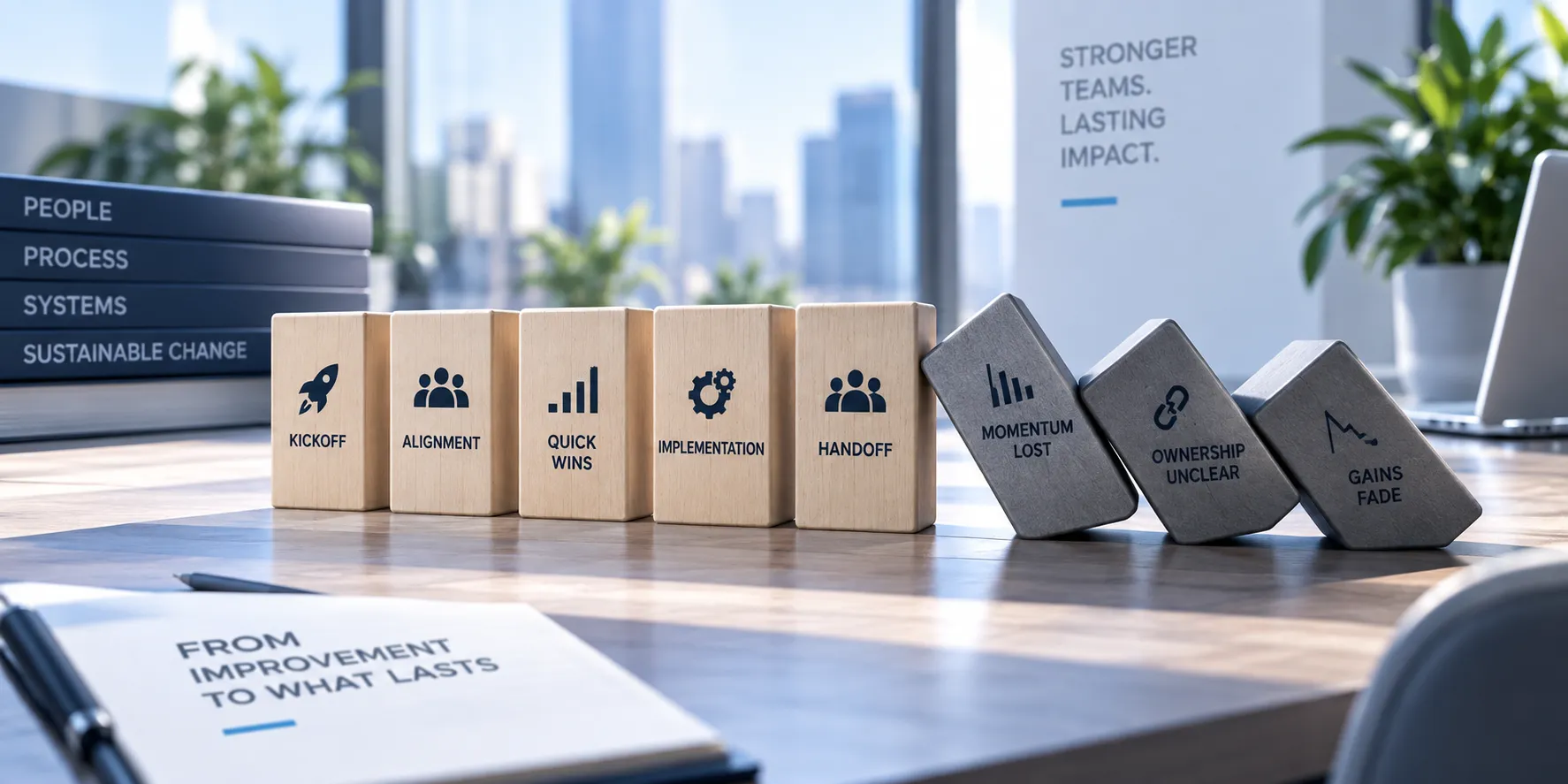
In our experience most of them still fail. Not because the methodology is wrong, but because the event gets treated as the entire intervention. The team assembles without baseline data, works through a process nobody has piloted, disperses on the final afternoon, and returns to the same conditions that produced the problem. Within weeks the gains are gone.
Kaizen and a Kaizen Event Are Not the Same Thing
These two terms get used interchangeably, and the confusion does real damage.
Kaizen is a philosophy. The word means change for better, and it describes the ongoing practice of small, incremental improvements made in daily work by everyone in the organization. It lives in the culture, not the calendar.
A Kaizen event is a structured, time-bound intervention lasting hours or days, aimed at one specific process or problem. A cross-functional team identifies issues, brainstorms, tests solutions, and implements quick wins under compressed conditions.
Organizations that run events without the philosophy get bursts of improvement that decay. Organizations that talk about the philosophy without ever running an event rarely move fast enough to prove it works. You need both, and you need to be clear about which one you are doing.
Preparation Decides the Outcome
Define the purpose and hold the boundary
Decide why the event is happening before anything else. Streamlining one process, removing a specific category of waste, closing a compliance gap. Then resist the urge to widen it. Narrowing to a single process or business area is what makes results measurable.
Establish the baseline before anyone gathers
Gather the starting metrics in advance: production times, error rates, costs, whatever the relevant indicators are. A team that begins with facts skips the first day of argument about what is actually happening.
Pilot the process and build the shortcuts
Run small-scale iterations using existing methods before the event to understand the improvement cycle in practice. Then use what you learn to build dashboards, queries, checklists, and other information radiators. This is the step most organizations skip, and it is the one that most reliably determines whether the event holds its schedule.
Secure executive sponsorship and make it visible
Get leadership buy-in, then get it publicized through town halls, quarterly updates, and internal channels. An executive champion connecting the effort to broader goals disarms change-averse resistance before it forms.
Recruit champions and name their backups
Seek out the people in each department willing to go beyond the event, and give them the support and latitude to be creative. Identify backup members in advance so an absence or a competing priority does not stall the room.
Design the Room Before You Design the Agenda
The logistics are not administrative overhead. They are the difference between a team that spends the day improving a process and a team that spends it hunting for whiteboard markers.
5S the space and stock it
Sort, set in order, shine, standardize, sustain, applied to the room itself before anyone arrives. Markers, erasers, sticky notes, index cards, pens, clipboards, and paper on hand so nobody loses twenty minutes to a supply cupboard.
Publish the timeline to everyone
Agree the schedule with the team, breaks included, and share it with non-participants so they know not to interrupt. Build reporting, debriefs, and the lessons learned session into the schedule rather than hoping time remains at the end.
Name the roles, not just the team
Sponsor, facilitator, subject matter experts, scribe, scoreboard manager. Publish who owns what so no part of the day is spent working out who is documenting decisions or updating the metrics.
Push interruptions into the breaks
Phones, email, and instant messages stay out of the working sessions, with short scheduled breaks absorbing anything urgent. Keep meals and refreshments in the room; participants who leave the building rarely return on time.
Running the Event
Facilitate rather than direct
Create a safe space for every participant to share what they observe. The most impactful improvements usually originate with the frontline employees who touch the process daily, and they will only surface if the room is genuinely open.
Work inside a proven framework
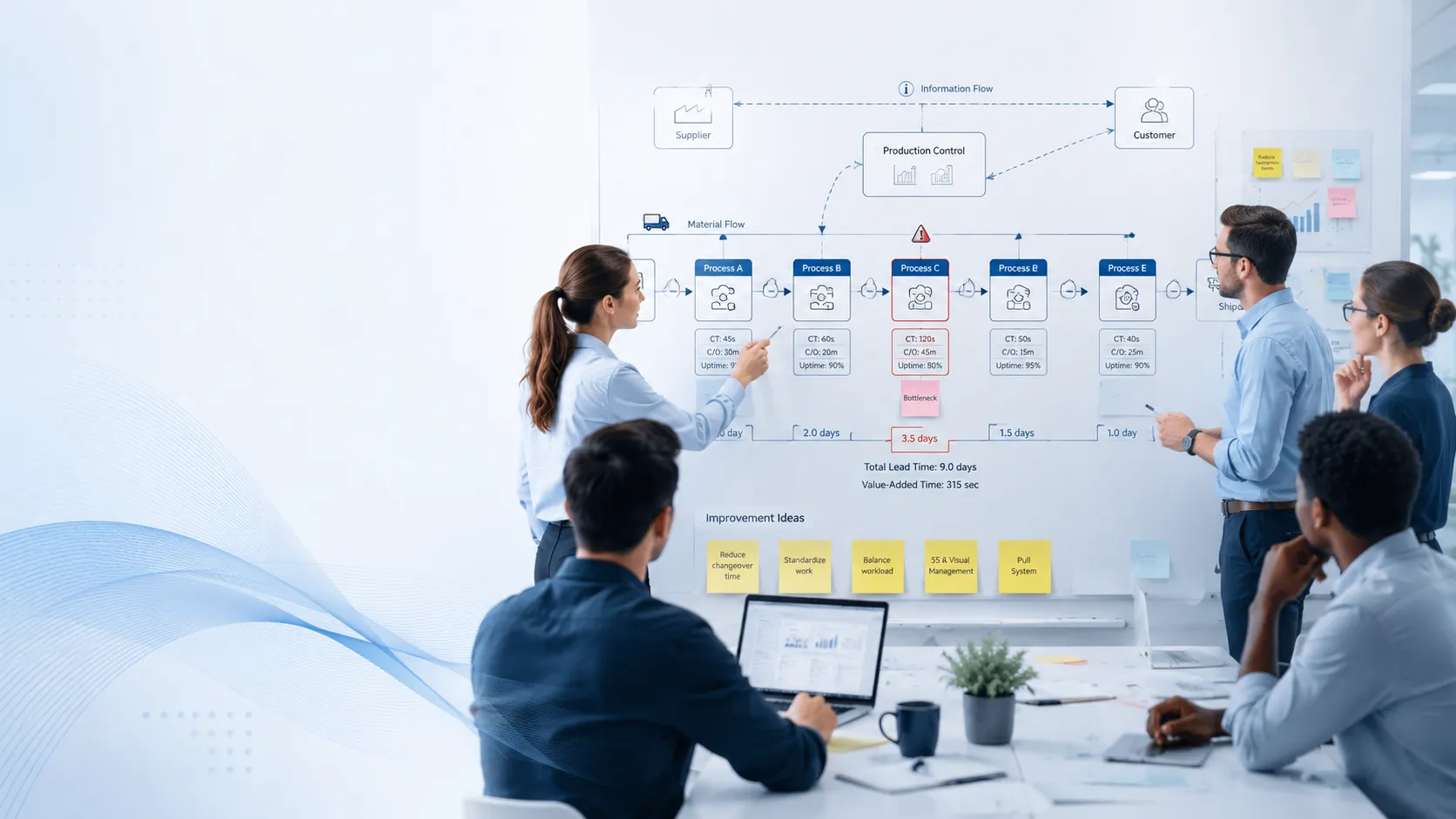
PDCA keeps discussion structured and moving. Value Stream Mapping exposes the bottlenecks and hidden wait time that conversation alone will not find.
Keep the scoreboard live
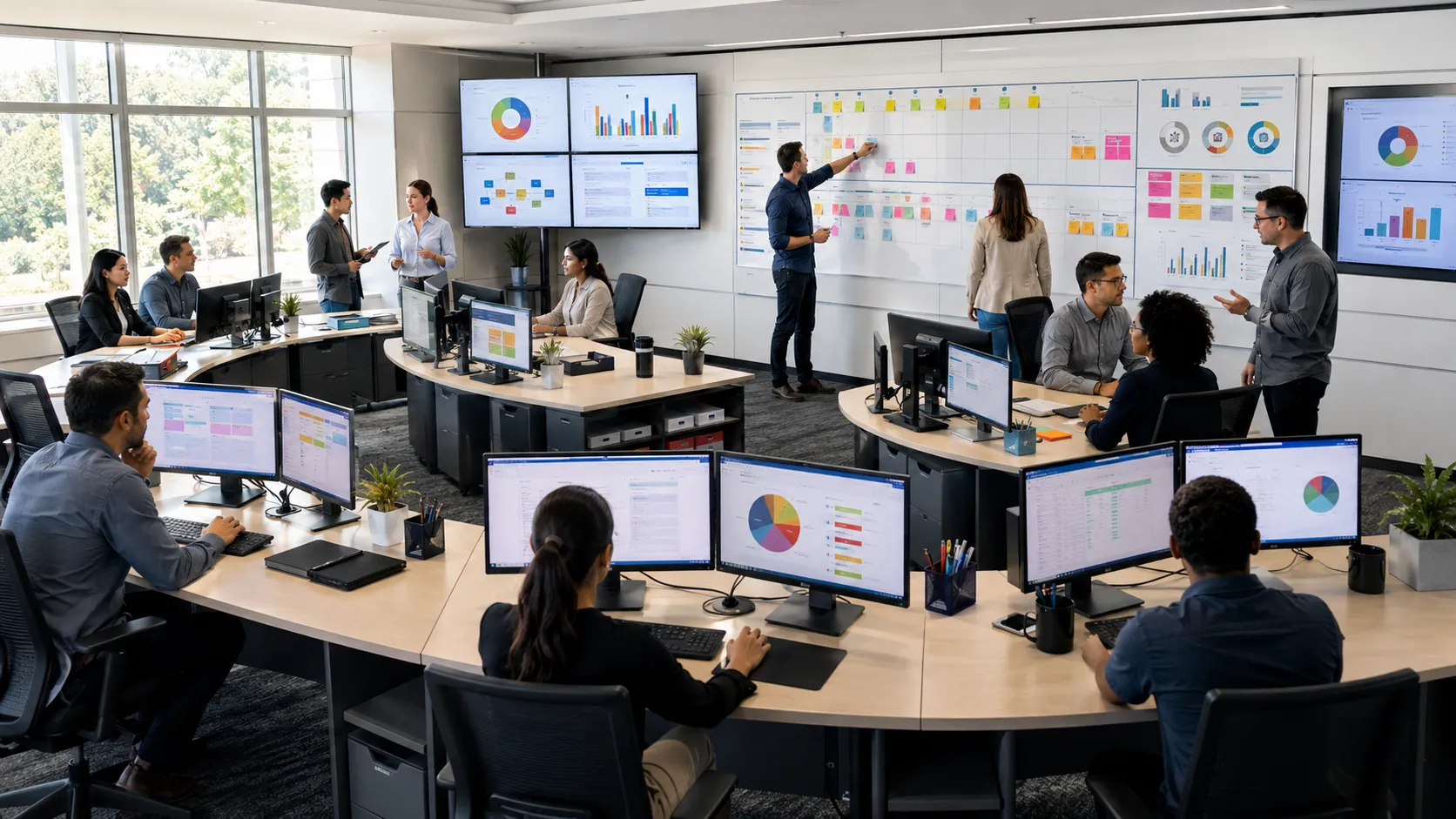
Update metrics and visual boards in real time against the goal. Transparency drives momentum and makes it obvious what still needs to happen, without anyone having to ask.
Honor the schedule exactly
Start and end every session at the designated time, even when tasks are unfinished. Never skip a planned activity, lessons learned least of all. This discipline is what makes people trust the process enough to commit to the next one.
Stay available to unblock
The event leader's job during the day is to absorb immediate needs, mitigate emerging risks, and adjust team composition if required, so the group returns to improvement work with minimal delay.
What It Looks Like When It Works
A healthcare compliance client had been migrating client systems onto a unified intake platform at roughly thirty per quarter, with federal compliance warnings already issued against the organization. We piloted two systems end to end, trained a handpicked task force on the validated process, and designed a single day around thirty-minute involvement slots per specialist.
Sixty-five migrations were actioned that day. The remaining 103 finished in days rather than quarters, and the company was returned to compliance. The team did not work faster than usual. The conditions around them were simply designed properly for once.
Sustaining the Gains
Follow up on a defined cadence, typically at thirty, sixty, and ninety days, and check both whether the metrics actually moved and whether anything broke downstream. Recognize the people who carried the changes, because recognition is what makes the next event easier to staff. Hold the lessons learned session as a scheduled activity rather than an aspiration, and feed what surfaces into the next event.
The goal is never to solve one isolated problem. It is to make improvement a normal condition of how the organization operates.
Where Kaizen Events Go Wrong
Scope too broad to measure
Most events try to fix everything at once. Without a narrow problem statement and baseline metrics, the team spends its energy debating boundaries instead of crossing them. Tangible results require a tight target.
Nothing after the final session
Action items go into a spreadsheet and nobody returns to them. Without named owners, a review cadence, and iteration, improvements are temporary by design. Kaizen is a cycle; a single workshop is not one.
The wrong people in the room
Events staffed with managers alone miss the frontline knowledge that drives real improvement. They also miss the Kaizen Champions in every department who are willing to carry changes past the final session, and without champions the improvements stop when the event does.
Poor preparation and no pilot
Without clear scope, baseline data, and preparation, valuable Kaizen time gets lost in confusion, debate, and searching for information instead of improvement. Skipping small pilots also increases the risk of implementing solutions that do not work. When an event fails to deliver results, leadership and employees can lose confidence in Kaizen—making it harder to secure participation, time, and approval for the next event.
Start the conversation