For organizations that grow through acquisition, purchasing is one of the first casualties of scale. Each acquired entity comes with its own vendor relationships, its own pricing, its own approval processes. In the short term, this is tolerated because there are more pressing integration priorities. In the long term, it becomes one of the most significant sources of margin erosion in the entire business - and one of the hardest to see clearly from the top.
What Decentralization Actually Costs
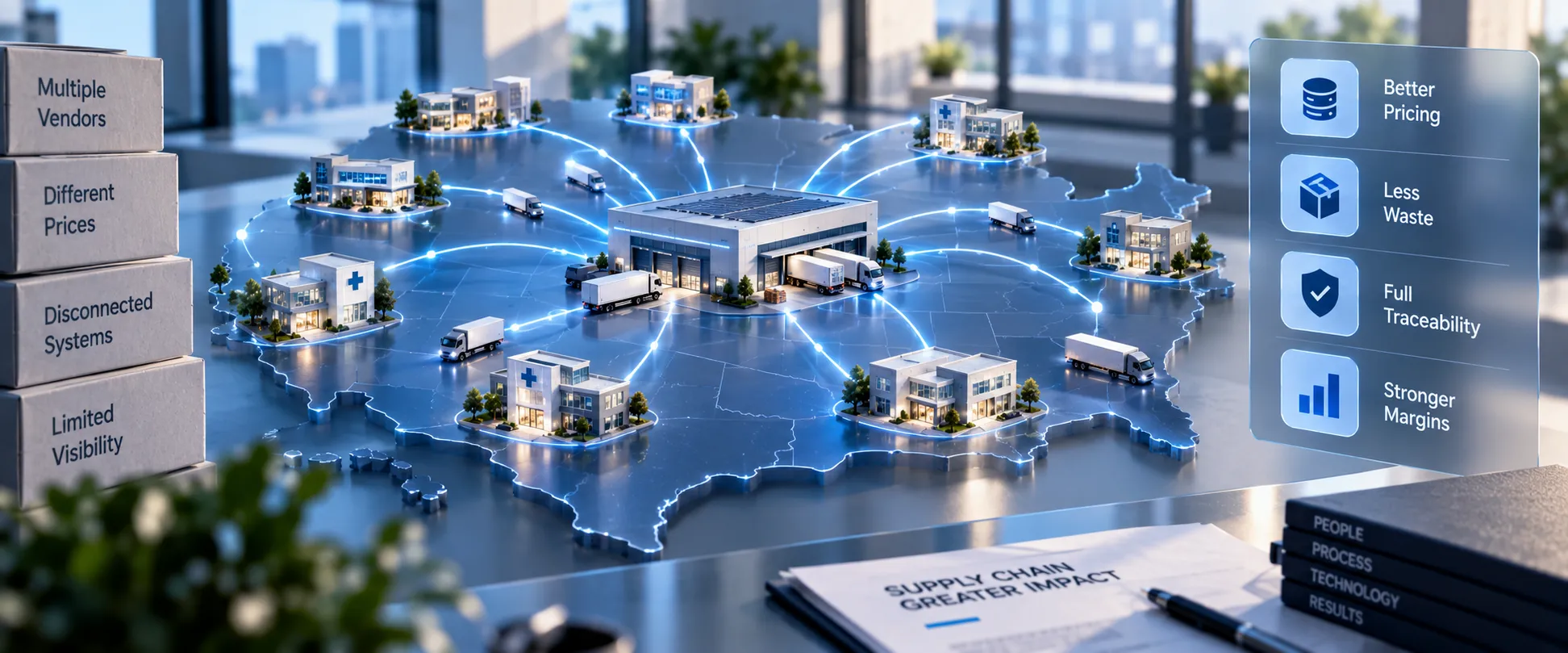
Price variability with no leverage
Each location negotiating independently means the organization never benefits from its full purchasing scale. Preferred pricing goes uncaptured.
Inventory waste and loss
Without standardization, perishable inventory is over-ordered at some locations and wasted. No cross-location visibility means no reallocation.
Untraceable transaction history
Product recalls become nearly impossible when purchasing records are fragmented across systems. Compliance risk accumulates invisibly.
Unreliable financial reporting
When purchasing data lives in disconnected systems, location-level P and L is impossible. Leadership makes capital decisions without the full picture.
What We Did for a 90-Location Eye Care Network
A private equity-backed eye care operator had grown to over 80 clinics and 10 surgery centers through rapid acquisition. Each location was independently negotiating with vendors. No one at the enterprise level had full visibility into pricing variability, inventory levels, or transaction history.
At a Glance
- $89M
- Annual purchasing centralized to a single platform
- $3M
- Annual savings through preferred pricing and inventory optimization
- 5,000+
- SKUs standardized across all locations
- 80%
- Improvement in product recall process efficiency through full traceability
How We Approached the Centralization
Current-state assessment
Assessed purchasing processes across all locations to identify gaps, redundancies, and consolidation opportunities.
Vendor evaluation and contracting
Evaluated supply vendors and Group Purchasing Organizations, short-listed candidates, and negotiated enterprise-level preferred pricing contracts.
Platform configuration
Defined users, roles, organizational entities, and approval hierarchies in the centralized procurement platform.
Phased pilot and rollout
Tested workflows with select locations before scaling nationally. In-person training conducted at each location to ensure adoption.
Financial visibility established
Integrated with accounting and BI systems to enable location-level reporting and performance benchmarking for the first time.
Ready to See What Centralization Could Mean for Your Network?
If your organization has grown through acquisition and purchasing still operates location by location, the margin improvement in that gap is larger than you think.